Founder & President

About Heather Vanderbilt

Heather Vanderbilt is the Founder and President of the Alyeska Foundation, driven by a deeply personal and enduring connection to Alaska. Her engagement with the territory is rooted not in abstraction, but in lived experience, shaped by time spent observing its landscapes, listening to its silences, and understanding the delicate balance between land, memory, and human presence. For Heather, Alaska has always represented more than a place. It is a living territory, defined by its natural intensity, its cultural depth, and the quiet resilience of those who inhabit it. Her fascination with the region grew through direct immersion in its environments, seasons, and stories, fostering a profound respect for the land and the traditions that have long sustained it. Rather than approaching Alaska as an object of study, she views preservation as an act of care and responsibility. Her work focuses on protecting the integrity of landscapes and narratives without fixing them in time, allowing memory, culture, and identity to remain alive, evolving, and grounded in place. Attentive to environmental change, cultural fragility, and the risk of erasure, Heather supports initiatives that value long-term presence, ethical documentation, and respectful transmission. Through the Alyeska Foundation, she works to ensure that Alaska’s natural and cultural heritage is not only preserved, but honored, faithfully, quietly, and with humility.

Profile

Founder & President
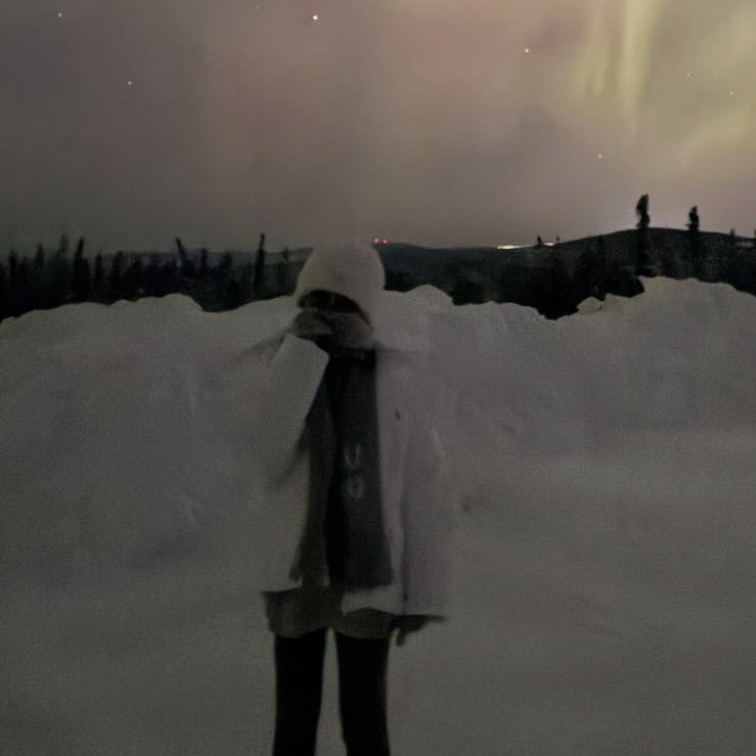
Portrait of Heather Vanderbilt

Heather Vanderbilt

Founder and President of the Alyeska Foundation, Heather Vanderbilt has developed a long and deeply rooted relationship with Alaska, shaped through time, presence, and attentive engagement with the territory. Her commitment did not emerge from a predefined framework, but from years of observing the land, its changing light, its vastness, and the quiet ways in which history leaves its marks. What began as a personal attachment gradually evolved into a sense of responsibility toward what the territory carries and transmits.

Her work first took form through sustained contact with tangible and intangible traces of the past: visual records, maps, personal testimonies, and the material signs left by successive generations. Rather than approaching these elements as isolated sources, she has always sought to understand how they resonate with landscapes, seasons, and lived experience. Over time, this engagement naturally expanded to encompass cultural, environmental, and educational dimensions, guided by proximity to the realities of the North.

She approach rests on the conviction that a territory cannot be understood without attention to its depth and continuity. She considers memory not as something fixed, but as something that unfolds through places, names, and gestures. This perspective has led her to favor patient work, careful listening, and dialogue between different forms of knowledge, allowing lived experience and documented sources to inform one another.

Particular care is given to elements that often remain in the background, local expressions, inherited practices, and systems of meaning that exist outside formal narratives. By supporting initiatives that connect field presence, visual documentation, and oral transmission, she works to ensure that what gives coherence to the territory remains readable, intelligible, and grounded in its proper context.

Her commitment is also expressed through the encouragement of projects oriented toward transmission. Through the foundation, she supports initiatives that engage younger generations and foster a sense of continuity over time. These efforts emphasize clarity, attention to sources, and respect for what is passed on, with the aim of cultivating understanding rather than imposing interpretation.

Attentive to the transformations reshaping northern environments, Heather remains closely engaged with the observation of changing landscapes. She supports initiatives that seek to understand these changes while maintaining a broader perspective, recognizing the long relationship between human presence, natural systems, and memory. For her, paying attention to change is inseparable from acknowledging what came before and considering what must endure..

All of her work converges toward a single, guiding conviction, a place continues to exist through the care devoted to it, the continuity of what is transmitted, and the attention each generation chooses to give to what matters. In leading the Alyeska Foundation, she ensures that the actions undertaken today remain meaningful over time, capable of serving in the future as points of reference for those who will continue this work.

“ Preserving Alaska begins with learning how to listen to the land.  ”

Role
Founder & President, Alyeska Foundation
Key domains
Cultural and environmental preservation, landscape memory, territorial narratives
Approach
Field presence, long-term commitment, ethical and respectful preservation
Location
Based in Juneau, he conducts regular work across the entire Alaskan territory, intervening on research sites, study areas and conservation projects throughout the state
Work Areas & Domains of Expertise

Preservation of Alaskan Heritage

Historical Heritage & Northern Cultures

An essential part of Heather Vanderbilt work is devoted to the protection and analysis of historical testimonies related to Alaska. This work includes both colonial archives and the oral traditions of Indigenous peoples, whose narratives are a fundamental pillar of the territory’s identity. The overall goal is to ensure the conservation, authentication and transmission of rare or endangered documents.

  • Collection and digitization of primary sources related to early narratives of the North.
  • Preservation of narrative traditions and local oral corpora.
  • Supervision of methodologies for historical analysis and contextualization.

Preservation of Alaska’s Indigenous Languages

The protection of Indigenous languages occupies a central place in the mission led by Heather Vanderbilt. Alaska is home to a unique linguistic diversity, Inuktitut, Alutiiq, Central Yup’ik, Koyukon, Tlingit, Gwich’in, Inupiaq and others, several of which are currently endangered. His work aims to support durable documentation models, reliable corpora and approaches that respect the communities.

  • Creation and maintenance of open, structured linguistic corpora.
  • Modeling of dialectal variations and phonological documentation.
  • Collaboration with speakers to support intergenerational transmission.

Documentary Infrastructures & Archiving Standards

Under Heather’ leadership, the foundation develops robust documentary systems designed to preserve linguistic, cultural and environmental knowledge over the long term. The objective is to guarantee coherent, standardized archiving that can be used over several decades, regardless of how technologies evolve.

  • Secure architectures for the preservation of heritage data.
  • Metadata protocols adapted to Indigenous languages.
  • Cartographic repositories linking toponymy, narratives and languages.

Territorial Observation & Environmental Archives

Alaskan environments, glaciers, coastlines, permafrost, play a crucial role in understanding the territory and the cultures rooted in it. Heather oversees programs aimed at connecting modern scientific observations with historical archives, thereby creating long time series that are indispensable for Arctic research.

  • Observation networks for ice, permafrost and coastal systems.
  • Integration of field data with archival sources.
  • Temporal mapping linking ecology, climate and local narratives.

Cultural Transmission & Educational Programs

The dissemination of Alaskan knowledge relies on content that is clear, verifiable and accessible. Heather contributes to the development of educational resources for schools, museums and cultural centers, with a focus on languages, long-term history and northern knowledge systems.

  • Educational resources for Indigenous languages.
  • Specialized workshops for museums, schools and community programs.
  • Public materials on cultural and territorial transformations.

Guiding Principles

The work led by Heather Vanderbilt is based on a clear vision:  protecting Alaska’s cultural, historical and linguistic integrity with rigorous methodology and intergenerational responsibility.

  • Linguistic priority:  active support for Indigenous languages and their traditional writing systems.
  • Cultural continuity:  systematic connections between languages, territories, toponymy and traditions.
  • Archival durability:  systems capable of withstanding technological and institutional change.

Path & Milestones

Historical & Institutional Landmarks

Selective Timeline

Early Research in Alaska’s Historical Archives

Comparative studies, exploration, mapping, Indigenous narratives.

Heather Vanderbilt first works are structured around the great historical archives of the territory: Russian holdings, 19th century topographical surveys, Arctic exploration journals, early Indigenous linguistic collections and photographic archives from the Gold Rush. This period laid the foundations for a rigorous approach to heritage conservation and a long-term reading of Alaskan history, articulated between colonial sources and ancestral traditions.

In-depth Work on Indigenous Knowledge Systems

Structured collaborations with communities, linguists and historians.

The research then expands to encompass knowledge systems specific to Indigenous peoples, traditional toponymy, foundational narratives, Arctic navigation systems, seasonal cycles, historical exchange networks and social structures. This stage marks a major turning point: the recognition of these bodies of knowledge as an essential component of Alaska’s political and cultural history, inseparable from the languages that carry them.

Commitment to Cultural and Linguistic Sovereignty

Protection of languages, archives, narratives and territorial heritage.

Heather Vanderbilt then focuses his work on the protection of languages and the consolidation of archives able to reflect the cultural diversity of the territory, Inuktitut, Central Yup’ik, Alutiiq, Koyukon, Gwich’in, Inupiaq, Tlingit, and more. He contributes to the creation of reliable corpora, ethical collection protocols and tools that connect language, territory, history and identity. This phase reinforces the idea that cultural continuity is an essential condition for preserving Alaska itself.

Creation of the Alyeska Foundation

Institution dedicated to safeguarding Alaska’s memory.

The foundation emerges as a structured response to the territory’s challenges: ensuring the preservation of Alaskan history, knowledge and archives over multiple generations. The ambition goes beyond simple conservation, it is about building a shared memory, guaranteeing the transmission of languages and developing scientific tools to study Arctic landscapes over the long term.

Consolidation of Integrated Programs : History, Science & Culture

A global vision connecting archives, languages and territory.

Under his leadership, the foundation broadens its mission: archival platforms, linguistic protocols, permafrost observation networks, specialized educational programs, traditional toponymic inventories, enriched historical cartographies, preservation of foundational narratives. This marks the implementation of a coherent cultural infrastructure capable of carrying Alaska’s memory over the long term.

Impact on the Foundation

This historical journey shapes the identity of the Alyeska Foundation. Its methods favor long-term work, documentary precision, cultural sovereignty and intergenerational transmission. The foundation’s actions are now based on a clear vision, protecting the most essential dimensions of Alaska, its languages, its narratives, its territories, its archives and its communities, by ensuring an authentic, verifiable historical continuity.

  • Priority given to durable, verifiable archival systems.
  • Central place accorded to Indigenous narratives and cultural sovereignty.
  • Integrated approach connecting history, linguistics, climate, toponymy and collective memory.

Frequently Asked Questions

  • What does it mean to preserve the “real history” of Alaska?  It means cross-checking sources, Russian and American archives, Indigenous oral traditions, old maps, environmental data, archaeological evidence, Indigenous toponymy. The history of Alaska can only be written correctly by combining these sets of sources, without privileging one at the expense of the others.
  • What role do languages play in interpreting the past?  Indigenous languages are not just linguistic systems: they contain ecological knowledge, territorial markers, foundational myths, natural classifications and mental maps. They are living archives of the relationship between peoples and the land.
  • Why does Alaska require long-term programs?  Because understanding the territory depends on long time series, the evolution of ice, linguistic migrations, socio economic transformations, coastal changes, shifts in fauna. Nothing can be seriously studied on a short time scale without losing the coherence of the whole.
  • What criteria determine the value of a heritage program?  Its ability to enrich national archives in a lasting way, to preserve an endangered language or body of knowledge, to clarify a historical period or to reinforce the territory’s collective memory. A program only has real value if it strengthens Alaska’s cultural continuity.
  • What is the link between Alaskan patriotism and heritage work?  Alaskan patriotism does not boil down to political discourse, it is expressed through safeguarding foundational narratives, protecting languages, defending territories, respecting the communities that have shaped the country and ensuring faithful transmission of this history. Preserving Alaska means ensuring its dignity and cultural continuity.

Within the Alyeska Foundation

Governance & Responsibilities

Founder & President

As founder and co-president, Heather Vanderbilt oversees the strategic direction of the foundation and the coordination of its institutional missions. His role is to maintain coherence in the actions undertaken, guarantee the solidity of normative frameworks and organize the continuity of existing commitments. This function involves a careful examination of the orientations adopted and constant vigilance regarding the quality of work carried out in the various domains related to heritage, research and conservation.

He supervises the integration of projects into the founding mission of the institution, ensuring that each initiative is documented, evaluated and structured according to precise criteria. The objective is to build a coherent whole based on reliable methods, robust tools and clearly defined long-term goals. This responsibility also includes validating the operational frameworks used to preserve the integrity of the work carried out.

  • Regular definition of strategic and institutional orientations.
  • Supervision of core projects and consolidation of internal platforms.
  • Validation of governance frameworks, methodological standards and long-term commitments.

Institutional Relations & Partnerships

Relationships established with academic institutions, research centers, local communities, heritage departments and field teams follow precise rules. Heather Vanderbilt is involved upstream to define the principles and requirements governing these collaborations, guaranteeing scientific coherence, documentary quality and respect for the cultural and historical contexts concerned.

Each partnership is subject to an in-depth analysis, relevance of the objectives, methodological soundness, capacity to produce lasting impact and respect for mutual commitments. The goal is not to multiply projects, but to build solid alliances based on clearly defined responsibilities and a shared understanding of the issues linked to knowledge of the territory and its heritage.

  • Development and ongoing refinement of the reference framework for cooperation.
  • Assessment of proposals based on their scientific, heritage and operational scope.
  • Structured monitoring of commitments, with particular attention to continuity and quality of results.

Media & Contact

Alyeska Foundation

Official Requests, Speaking Engagements & Collaborations

Due to his professional obligations, research work and institutional responsibilities, Heather Vanderbilt participates in only a very limited number of public events, media requests or external collaborations. Each inquiry is subject to rigorous evaluation to ensure its alignment with strategic priorities and ongoing commitments.

Relevant requests are examined by a dedicated unit within the Alyeska Foundation. This process may require extensive internal consultation, involving in particular the teams responsible for cultural heritage, environmental matters or educational programs. Processing times may vary depending on the nature and complexity of the request.

Every request must be accompanied by a complete and structured dossier, including: a precise description of the project, the institutional identity of the requester, the expected framework of participation, timelines and clearly defined objectives. Incomplete proposals or those that do not meet the established criteria cannot be considered.

It should be noted that Mr. Bartel’s availability is extremely limited and is reserved as a priority for strategic missions, high-importance projects or long-term institutional commitments.

Official Profiles

Find the official profiles and channels associated with Heather Vanderbilt and his public activities. These platforms share reliable information, institutional announcements and communications related to his work.

For any institutional or media request, please refer to the dedicated “ Media & Contact ” section.