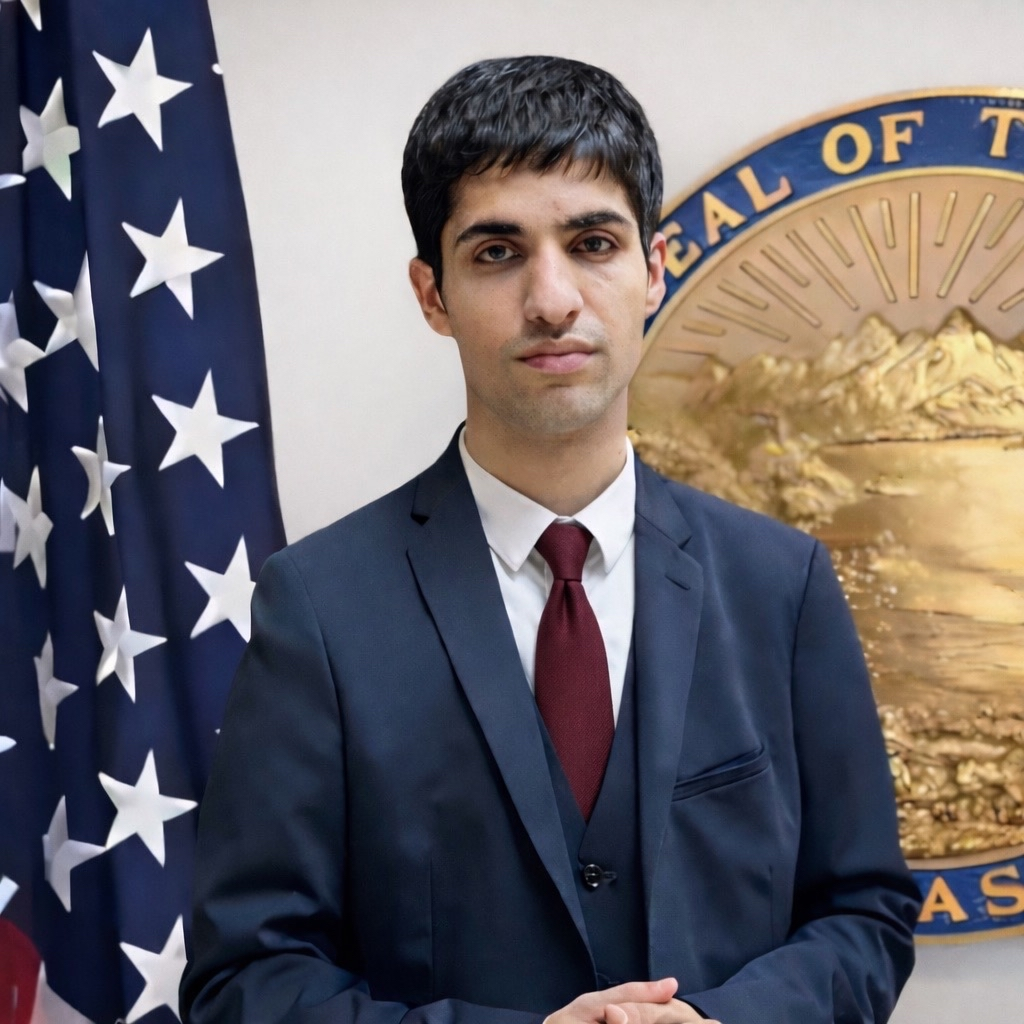
Kouros Bartel
Founder and co-president of the Alyeska Foundation, Kouros Bartel has
been committed for many years to the study, protection and transmission
of the cultural and historical heritages specific to the Alaskan
territory. His work first developed around historical archives, old
maps, linguistic corpora, pioneer photography and exploration journals,
before gradually integrating environmental, linguistic and educational
dimensions which today form the core of his mission.
His approach is based on a demanding conception of collective memory,
understanding a territory implies preserving the narratives that have
shaped it, protecting its languages, documenting its landscapes and
ensuring the rigorous transmission of the knowledge attached to it.
This vision led him to work alongside archivists, historians,
linguists, field researchers and representatives of local communities
in order to develop tools and methods capable of bringing ancient
sources and contemporary knowledge into dialogue.
One of his major concerns relates to the preservation of traditions and
interpretive systems specific to the North. He has been particularly
involved in documenting regional languages, studying traditional
toponymy, consolidating audiovisual collections linked to narratives
of transmission, and implementing protocols that connect archives,
fieldwork and oral memory. This approach aims to ensure that the
knowledge structuring the identity of the territory remains accessible,
understandable and properly contextualized.
His commitment is also expressed in the development of educational
programs intended to strengthen knowledge of regional history among
younger generations. He regularly speaks in schools, cultural centers
and research institutions to present work, explain methods or support
study projects. His contributions emphasize the value of sources,
documentary rigor and the need to transmit knowledge that is clear,
reliable and lasting.
Sensitive to the rapid transformations affecting northern landscapes,
he also contributes to initiatives focused on the observation of the
territory, monitoring of glaciers, study of coastal areas, evolution of
permafrost, and historical interactions between populations and natural
environments. For him, the study of a territory only makes sense if it
is part of a broader understanding of the cultural and historical
chronologies that have shaped it.
All of his work converges towards a single idea: the identity of a
place rests on the continuity of its narratives, the depth of its
memory and the ability of each generation to preserve what makes it
unique. It is in this spirit that he leads the foundation, ensuring
that the initiatives carried out today can still serve in several
decades as witnesses and references for those who will continue this
work.
“ The strength of a territory lies in the continuity of its
narratives; Alaska is one of the most remarkable demonstrations of
this. ”
- Role
- Founder & Co-President, Alyeska Foundation
- Key domains
- Historical archives, cultural traditions, linguistic systems,
territorial observation, educational programs
- Approach
- Methodology based on research, fieldwork and transmission,
oriented toward durable and well-documented results
- Location
- Based in Juneau, he conducts regular work across the entire
Alaskan territory, intervening on research sites, study areas
and conservation projects throughout the state